The contest I lost, and never forgot.
I practiced a speech about getting involved, lost to a younger boy with a squeaky voice, and cried on the ride home. That was not the end of my speaking career.
The full origin story ↗I write stuff. I speak about stuff. Sometimes people even pay me for it.
I'm a futurist, an author, a lifelong geek, a former accountant, an ex-roadie (briefly), an optimist, and a Canadian. (Sorry.) This is the less-polished corner of my Internet — the bits that don't fit on a speaker-bureau page.
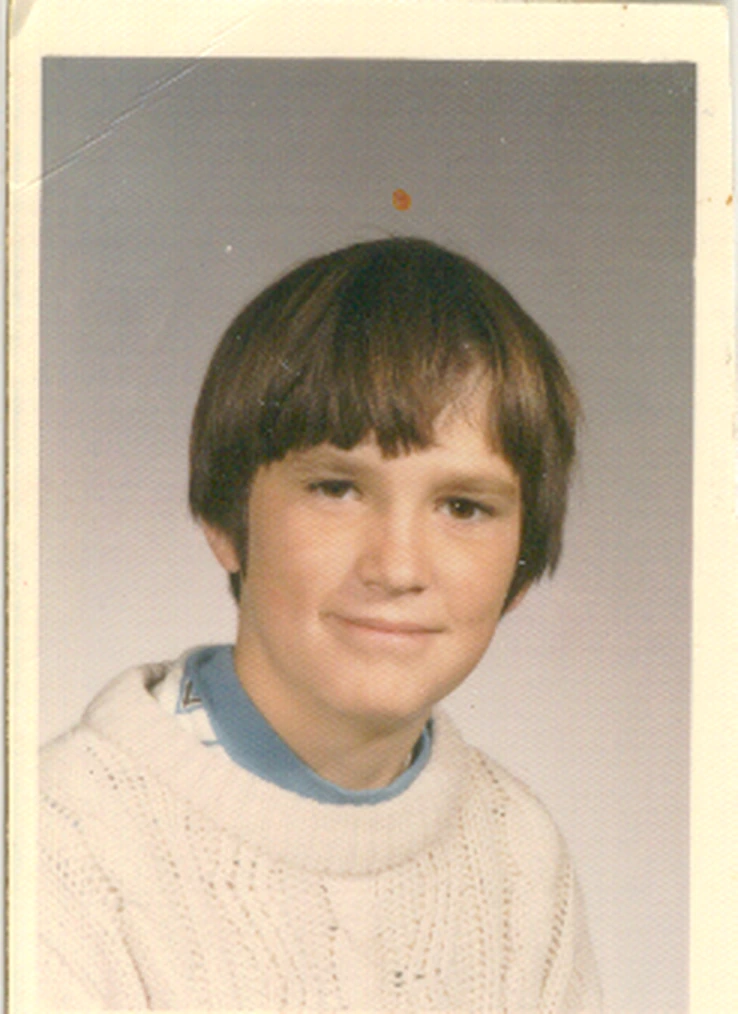
And somehow, that may be where the speaking career began.
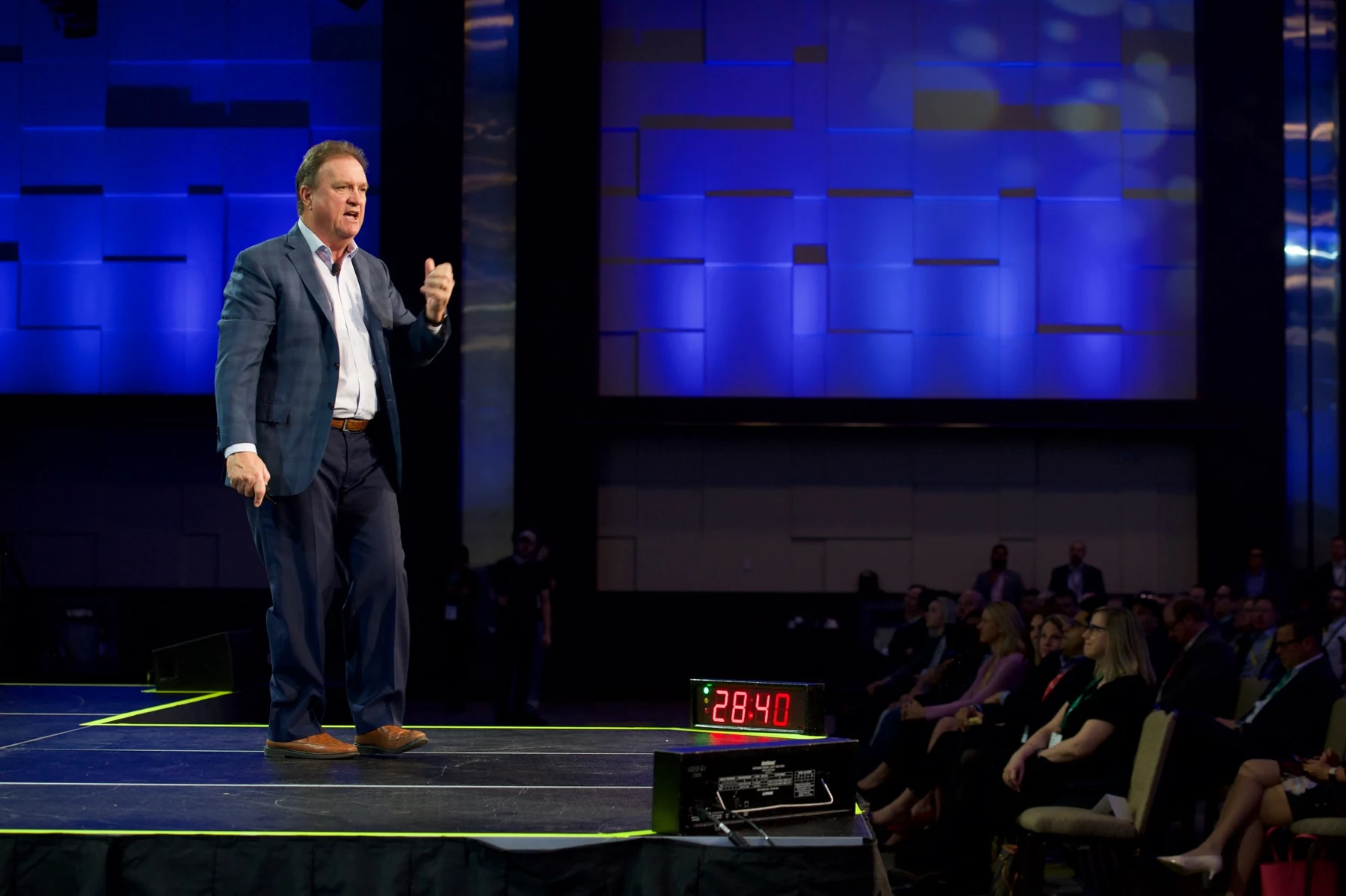
I was in Grade 8. While other kids were playing hockey, my parents had signed me up for an Optimist Club public-speaking group. I spent weeks learning how to stand in front of an audience, find the words, and get people to listen. Apparently, I was an unusual child.
My speech was called “Our Challenge: Involvement!” It was a serious little talk about an indifferent world, inspired by the social upheavals and headlines of the late 1960s. I practised in front of a mirror, my classmates and, no doubt, anyone who couldn't escape.
By the time the competition arrived, I was sure I'd win. Instead, a younger boy with a squeaky, whiny voice beat me. I was devastated. I cried in the car on the way home. Decades later, I can still remember that voice.
Funny thing, though: the lesson lasted longer than the loss. Somewhere between that first stage and the thousands of people I'd speak to later, I learned that a setback isn't a verdict on what happens next.
Read my longer recollectionI seem to have accumulated a ridiculous number of places online. Here are the useful ones. Email is still the best way to reach me.
And I'm nowhere near finished.
I started out auditing chicken co-ops and fish plants in Nova Scotia. Then someone brought a computer into the office, and my life took a rather sharp left turn. Along the way I became an Internet author, a radio host, a futurist, and a fellow who has spent an unreasonable amount of time explaining tomorrow to people.
The résumé version is tidy. The real version involves backstage rock concerts, borrowed IBM PCs, computers shouting at Madrid at three in the morning, a purple playpen, a book that sold, books that didn't, missed predictions, and an enormous amount of help from Christa.
I believe in science, curiosity, optimism, facts, and doing interesting things before somebody tells you they're impossible. Mostly, I'm still trying to figure out what I want to be when I grow up.
A scrapbook of improbable detours, small catastrophes, weird hobbies, big stages, and ideas that refused to stay in their lane. The story did not end when the Internet arrived.
I practiced a speech about getting involved, lost to a younger boy with a squeaky voice, and cried on the ride home. That was not the end of my speaking career.
The full origin story ↗I hauled gear at Halifax and Moncton concerts. I think I even carried April Wine’s red bell onstage. Of all my early career credentials, this may be my favourite.
My first jobs weren't futuristic. I was a chartered accountant going through ledgers in small-town Nova Scotia. Then we got a computer. Things got complicated.
A pension analysis was too big for Lotus 1-2-3, so I divided the work among about a dozen borrowed computers. After sleeping at the office, I loaded them into my car to keep them running at home.
I hosted forty short Micro Minute radio segments about personal computing. One episode explained an AI medical-diagnosis program called MYCIN. In 1984. On regional radio.
Christa found me in our kitchen at three in the morning, yelling down an atrocious phone line while helping our Madrid office coax a modem into working. She married me anyway.
I wrote rather bluntly about how email could change traditional mail. Unfortunately, my accounting firm was courting Canada Post. The timing was less than ideal.
I actually recorded the moment I began The Canadian Internet Handbook: November 22, 1993, at 10:54 a.m. We wrote it in about two months; Christa laid out the pages herself.
At a book launch people were buying copies faster than I could process. I brought the cash home and emptied it on the bed in front of Christa, who was feeding our baby. Our publishing operation was quite sophisticated.
A magazine reporter arrived to find me barefoot, in gym shorts, in a messy bedroom office. A purple playpen sat in the corner. The door sign said J.A. Carroll Consulting and Sons.
I was confidently wrong about that one. The world subsequently invented an entire economy of spam. The prediction business can be humbling.
I promoted my new Internet book to an online newsgroup and was promptly roasted for self-promotion. Some things about the Internet really haven't changed.
I overslept before an early live CBC Ottawa interview, ran to the phone, and somehow talked technology for ten minutes while completely naked. You couldn't see me. Fortunately.
For a while, an in-flight show on Air Canada and Canadian Airlines carried my e-commerce commentary. Somewhere over the country, people were trying to get away from the Internet. They got me instead.
Light Bulbs to Yottabits was commercially unsuccessful, even though some of the big ideas held up. A useful reminder that being early and selling books are different things.
The dot-com downturn was not exactly great for business. Rather than spend another Canadian winter indoors worrying about it, our family took up skiing. A financial crisis accidentally led to a lifelong obsession.
A Dalhousie magazine reporter came to our home and found about 25 computers, including one handling 17,000 MP3 files. The house was normal in every other respect. Well, almost.
I kept telling organizations they would soon care about blogging. Many weren't interested. A few years later, everybody wanted to know what their CEO should be writing online. Being early is sometimes indistinguishable from being ignored.
I watched frogs brilliantly avoid birds — only to get blindsided by passing golf carts. I turned that strange resort moment into a lesson about the disruptions nobody sees coming.
I'd spent years telling audiences what iconic brands could teach them. Then Disney asked me to address its own executives. At some point in my career, the direction of the advice had reversed.
Willie became a genuinely good golfer — about a one-handicap player — and helped pull me into the game. I thought I was taking up a hobby. I appear to have accidentally enrolled in a lifetime course on humility.
At a CSC executive event, I shared the program with Jimmy Wales. One of the more curious turns for a guy who had started out trying to explain what an Internet connection actually was.
I play roughly a hundred rounds a year. Naturally, I turned a game involving a little white ball and a lot of bad decisions into a project about focus, psychology and navigating uncertainty. See jimcarroll.golf.
The island-green 17th at Hawaii’s Makani Golf Course became my miniature laboratory for fear, decision-making and all the ways a perfectly capable human can talk himself into hitting a ball into water.
I began writing a Daily Inspiration in August 2016 and kept showing up, weekday after weekday, for a decade. The collection eventually became the raw material for a very different kind of book.
In Dubai I spoke at the World Government Summit. Imagine telling the young accountant auditing fish plants that someday he'd be talking about tomorrow to people involved in running entire countries.
When live events shut down, I assembled cameras, lights, virtual sets and greenscreens into a home studio. It was either that or stare sadly into Zoom for a year.
Christa and I have spent years supporting Events for Life near our ski chalet. I handle website and technology work; the friendships and people there have taught me lessons no conference stage ever could.
I got into skiing with the family and eventually started tracking my carving and parallel-turn ratios with sensor-equipped boots. Apparently I cannot enjoy even a mountain without a dashboard.
I left the accounting-firm world in 1990 to chase a future many colleagues couldn't see. In 2024, KPMG Ireland invited me to speak at its management conference about that very future. Life has a sense of humour.
In a couple of weeks I flew to the UAE to speak about future-proofing a nation, returned home for ski runs at Georgian Peaks, and then headed to Costa Rica to talk digital twins with landscape architects. This apparently counts as a normal work schedule.
After decades of trying to explain what comes next, I wrote Being Unique, a book about what cannot be standardized, copied or automated: the oddities that make a person unmistakably themselves. Including, I suppose, this website.
A major overhaul of JimCarroll.com happened while family were at the ski chalet. My grandson has a strict no-computers-while-he's-around policy, so the work moved to early mornings and stealth sessions between naps. He is a tough project manager.
A very abbreviated history. The actual version involves more dial tones, more coffee, and several unexpected U-turns.
Backstage at KISS and April Wine concerts. Not a natural step toward a career in accounting.
Dalhousie, a chartered-accountant designation, rural audits, VisiCalc and my first adventures online.
Distributed a spreadsheet problem across borrowed PCs, hosted Micro Minute, and helped build Thornet/EWiNet, an early email network that eventually reached thousands of users.
Left a big accounting firm in November and began consulting. Christa’s support made the leap possible.
Started writing at 10:54 a.m. on November 22. The Canadian Internet Handbook came out in 1994 and became a national bestseller.
NetTalk, newspaper columns, in-flight audio, early blogs and an endless stream of explaining the Internet. Some projects worked. Some definitely did not.
Christa and I created our publishing imprint, named for the round-headed outsider in Harry Nilsson’s The Point!.
July 26 was the day I had my last drink. A month later, a daily writing habit began that would grow into a decade of reflections.
COVID ended the live-events calendar. I built a virtual broadcast studio in my basement and kept going.
New books, deep research, a rebuilt digital world, a lot of skiing, and no plans to stop learning.
“The future isn't something you wait for. You decide what to do with it.”
A bestseller, a flop, and a question that never really went away.
In November 1993, Rick Broadhead and I started writing The Canadian Internet Handbook. We gave ourselves two months. Rick brought his remarkable directory of Canadian Internet resources; I brought years of experience explaining this strange new online world. Christa edited and challenged the work, then personally designed and typeset the pages so we could move at a speed traditional publishing couldn't match. The book arrived in March 1994. By July it was #1 on the Financial Post paperback nonfiction bestseller list. Then came interviews, radio shows, book signings, and invitations to speak. Our lives had taken a rather unexpected turn.
The unexpected bestseller got the headlines. The real secret weapon was Christa, who turned two computer geeks’ work into an actual book.
Our later book Light Bulbs to Yottabits explored where connectivity would take us next. It sold poorly. In retrospect, it contained ideas that mattered. But the market for explaining how to get on the Internet was disappearing. That failure forced me to learn a new trade: not explaining a tool, but exploring what change would do to people's futures.
You don't get all the predictions right. You don't get all the books right. You keep going anyway.
Some are about the future of business. Some are about being different. One is about getting your future back.
251 Thoughts for Recovery, Resilience and a Better Tomorrow
Ten years of daily writing, 251 reflections on recovery and hope, and one very simple idea: you don't have to solve the rest of your life today.
Why being a rebel, an odd one out, or a wonderfully different person might be your greatest advantage.
When the world gets stormy, the answer isn't always to hide. Sometimes it's to find a way to move.
The rest of the books, the history behind them, and some rather good stories live at Oblio Press ↗.
Apparently, there is life outside PowerPoint. Who knew?
The family took up skiing during a difficult career stretch. It became a lifelong obsession. Golf came later, and with it a parallel obsession with the psychology of the island green. Somehow I found a way to turn both into data projects.
I'm still happiest when I'm tinkering with Linux, building websites, and running a ridiculous collection of systems. I like knowing how things work.
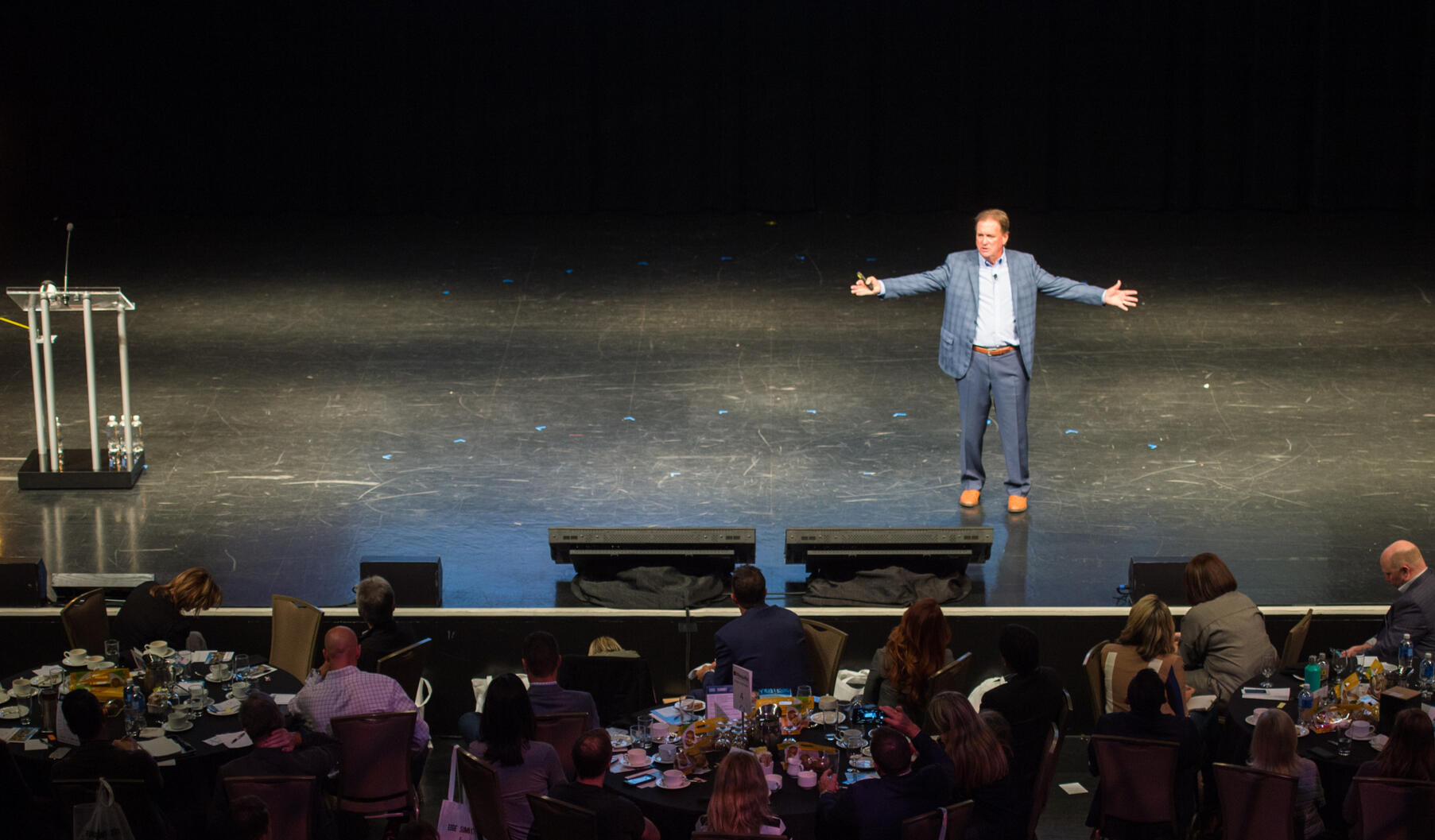
Christa is the person who made the whole improbable enterprise possible. She helped finance the early leap, designed and typeset our first Internet book, edited our writing into something actual humans could read, and kept a young family moving through the chaos.
I have described her as the Fifth Beatle — the producer and partner who makes the whole thing work. In truth, that understates it.
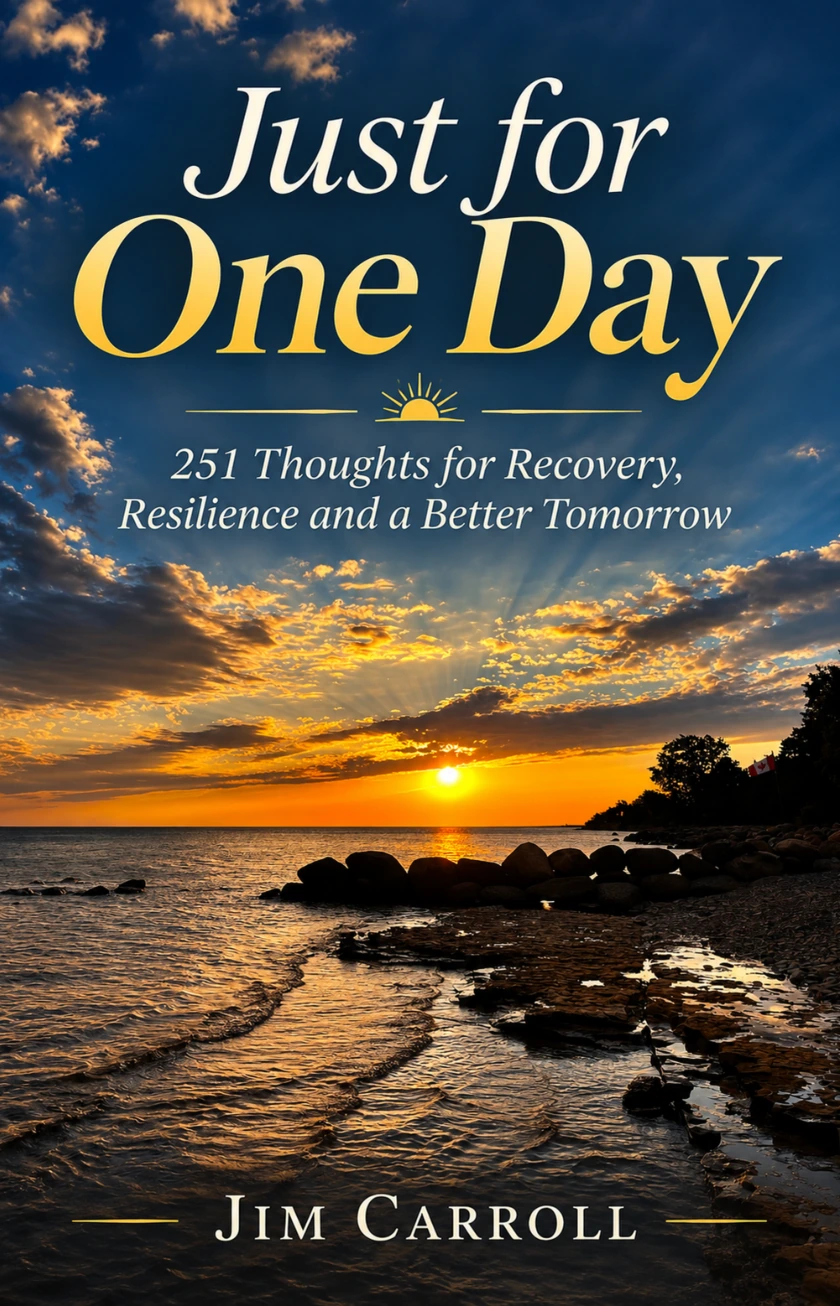
At Ward Beach in Craigleith, I photographed one of the early mornings I love. That photograph became the cover of Just for One Day.
Whenever I watch the light return, I find myself thinking the same thing: the sun really does rise in wonder.
The story behind the cover ↗I had my last drink on July 26, 2016. Recovery didn't just change my habits. It changed what I thought tomorrow could be. I began writing every weekday one month later, and kept going for ten years.
That writing became a way of helping myself — and, I hope, other people who needed a little faith in the next day.
Read about Just for One Day ↗I went online in 1982. Apparently, I never figured out how to log off. And somewhere along the way, every big idea decided it needed its own domain.
No, one website was not enough. These are the main public rabbit holes. They cover the serious, the personal, the wildly nerdy and the completely ridiculous. I made them because I could — and because I love building things.
The more polished version of me: keynotes, trends, research and 30-plus years of trying to explain tomorrow.
The AI revolution viewed through actual industries, rather than a wall of breathless hype.
A look at how much research goes into a keynote. Spoiler: I don't just swap the client's logo.
Everything the speaker bureaus need: bios, videos, background, and the practical bits.
My enthusiasm for golf and the changes transforming the sport. No, I can't help analyzing the game.
A decade of morning thoughts that started in 2016 — and the stories, ideas and reflections that followed.
Decades of ideas turned into practical lessons on innovation. Still adding to the collection.
110 stories about an extraordinary future, named for a number with 24 zeroes. The domain waited 26 years for this.
Older ideas, new evidence, and imagined tomorrows. An archive with a time machine attached.
A journey through how different industries are being rewritten by acceleration and change.
A year-specific collection of 26 principles for exponential growth, reinvention and moving beyond linear thinking.
A collection of essays and ideas about what matters when the future refuses to sit still.
My 30 Megatrends project. The site is also getting a much-needed rebuild.
Why the answer to uncertainty isn't to hide under a desk and wait for a return to normal.
The full bookshelf — from the Internet's early days to reinvention, resilience and being different.
The independent imprint Christa and I built. Stories, books, and a surprisingly long publishing history.
Being Unique: why the rebels, the curious, and the gloriously different matter.
A book and a site about finding momentum even when the storm doesn't go away.
Two opposing books: one celebrates the art of doing nothing; the other explains how to escape it.
251 reflections on recovery, resilience, hope and the gift of another tomorrow.
Yes, there are two of us.
The other Jim Carroll was the extraordinary poet, musician and author of The Basketball Diaries. I registered jimcarroll.com early, and for years people looking for him found me instead. I received fan mail that wasn't meant for me.
Different lives, different careers, different journeys. If you arrived here searching for his work, the Internet has given you one of its little detours.
And yes, I've probably been explaining this since the dial-up days.
If something here interests you, say hello. I do read my own mail. And if you're another veteran of the very early online world, I definitely want to hear from you.